
Unceasing war on poverty: Beatrice and Sidney Webb and their world
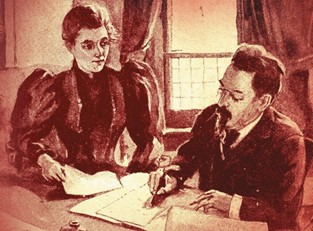
Michael Ward’s biography of Beatrice and Sidney is the first comprehensive life of both Webbs for forty years. It was written with the support of the Webb Memorial Trust.
It draws extensively on their own archive, held at the London School of Economics, and on material held by the UK National Archives, the British Library, and many other collections.
The book traces the development of the Webbs’ politics:
- In the years following their marriage in 1892, Sidney and Beatrice believed in permeation – trying to influence all political parties to adopt their policy proposals. Sidney had great success in persuading Liberal London County Councillors, and Conservative Ministers, to follow his lead on the expansion of secondary and technical education.
- But Beatrice and Sidney had far less success persuading the pre-First-World-War Liberal government to take up the radical recommendations of Beatrice’s 1909 Minority Report on the Poor Law. After years of exhausting campaigns, they switched tactics in 1912, committing themselves to the fledgling Labour Party and to social democracy – in Sidney’s phrase, inevitable gradualness.
For the next twenty years they worked to grow Labour’s capacity, to the point where the Party could after the War emerge as one of the two main parties, and then, on two occasions, form minority governments.
- After the 1929 Wall Street crash, and the ensuing slump, the second Labour government had no solutions to mass unemployment. Under pressure to make drastic cuts to public spending, and faced with an ultimatum from New York bankers, the government fell apart in August 1931, with the former Labour leader forming an anti-socialist coalition with Liberals and Conservatives.
Even the Webbs themselves began to doubt inevitable gradualness. Their eyes turned to the Soviet Union, where they thought a new civilisation was emerging.
In 1932 they toured Russia and Ukraine as guests of the regime, seeing only what their hosts wanted them to see. The resultant book, Soviet Communism: a new civilisation? was propaganda.
In Britain they continued to support the Labour Party – and the Fabian Society. They were shocked by the 1939 Hitler-Stalin pact, and relieved when, after 1941, Britain and the Soviet Union became allies.
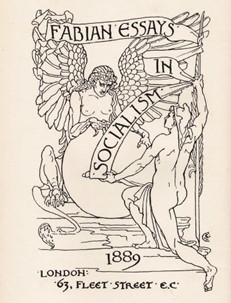
At the same time as their political thought evolved the Webbs created lasting institutions. Sidney was not quite a founder member of the Fabian Society – but he was a very early recruit, and played a leading role, with George Bernard Shaw, in the production of their first policy statement, Fabian Essays.
Beatrice did not stand for the Fabian Executive Committee until 1912 – but from then on she played a leading role. She was President of the Society when she died in 1943.
In 1894, a leading Fabian benefactor, Henry Hutchinson, shot himself, leaving about £10,000 to the Fabian Society. Sidney and Beatrice quickly decided that the lion’s share of the Hutchinson bequest should be used
…to found, slowly and quietly, a ‘London School of Economics and Political Science’.
And so the LSE was established.
In 1912, when after the defeat of the Poor Law campaign the Webbs committed themselves to Labour, they decided
…to try to get going a really good weekly newspaper, with a decent ‘tone’…
The result was the New Statesman; the first edition appeared in April 1913.
The Webbs nurtured these three institutions – the think tank, the university, and the weekly journal. By now all have long outlived their founders. They have also survived longer than the details of Britain’s 1945 welfare state – and longer than the Soviet Union. Of the three, only the Fabian Society is or was formally part of the Labour Party. But the three together have given the left an intellectual hinterland, or infrastructure.
When, in the 1950s and 1960s, it began to be realised that the 1945 settlement had not, after all, resolved poverty for all time, the institutions of the Webb legacy – the Fabians, the LSE, and the New Statesman – were in the forefront of analysing the new problems, and proposing new solutions.